If you're comparing public school, online school, and other options, you've probably noticed something: not all learning models are created equal.
Some online schools just move traditional coursework onto a screen. Others offer flexibility but little personal connection. Public schools serve many students well, but they aren't the right fit for every learner.
So how do you choose? The answer comes down to more than curriculum or convenience. It's about how your student learns, who supports them, and who they're becoming along the way.
Quick Answer: Which Option Fits Your Student?
If your student needs structure, an in-person routine, and local resources, public school may be the right call. If they need flexibility but still crave real interaction, mentorship, and a curriculum that builds critical thinking, one of our schools in the Williamsburg Family of Schools was built for exactly that gap. Below, we break down the differences so you can decide with confidence.
What Does Online School Usually Look Like?
When most parents picture online school, they imagine a student working alone through recorded lessons, taking quizzes, and waiting days for feedback from a teacher they've barely met.
That model exists, and it offers flexibility. But for many students, it also feels isolating. Without real interaction or mentorship, learning can turn into a checklist of digital tasks.
Some students do fine with that setup. Others end up disengaged and unprepared for the collaboration and critical thinking they'll need after graduation. That's why our family of schools took a different approach.
What Makes Our Family of Schools Different
1. Live, Discussion-Driven Classes—Not Pre-Recorded Videos
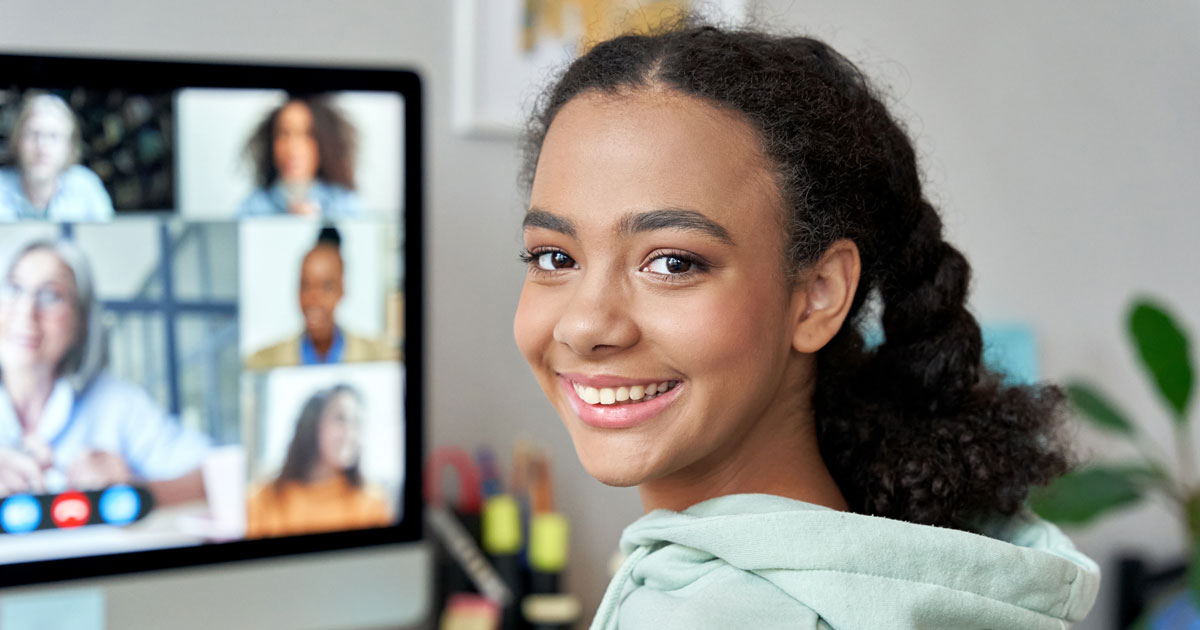
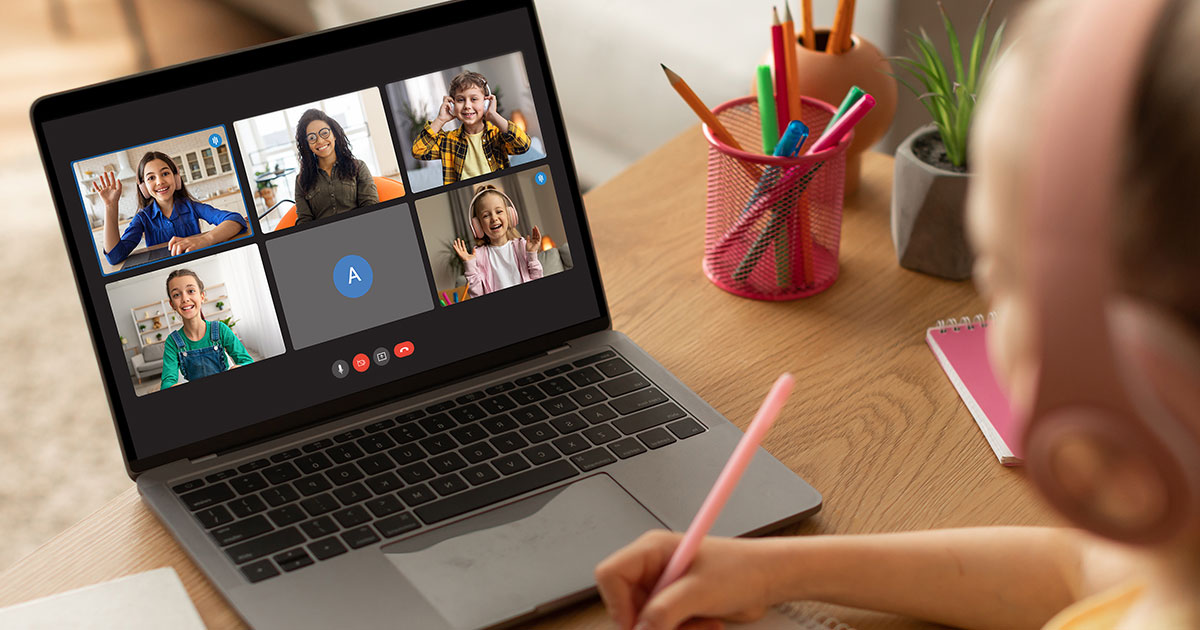
Learning works best when students participate, not when they simply watch. That's why most students in our schools attend live classes four days a week, joining real-time discussions led by experienced mentors using the Socratic Method.
Instead of absorbing information passively, students ask questions, present ideas, and think critically alongside classmates. The result feels personal and engaging, even online.
2. Mentors, Not Just Teachers
Great education runs on relationships. Instead of distant instructors, our accredited educators act as mentors who guide, encourage, and challenge students throughout their time with us.
Every mentor is trained to:
-
Ask thoughtful questions that build independent thinking.
-
Build real relationships with students.
-
Create discussion-centered learning experiences.
-
Give specific, actionable feedback.
-
Help students discover their strengths.
-
Personalize instruction using student learning data.
For families, that means your student is known, not just a name in a gradebook.
3. A Curriculum That Teaches Students How to Think
Most online and traditional schools center on content delivery and progress assessments. Students memorize facts, repeat them on a test, and move on. Our curriculum is built around a different idea: teaching students how to think, not what to think.
Our courses blend deep readings from history's great thinkers, lively discussions, and projects that connect to the real world. Students learn to form their own conclusions, defend their ideas, and apply timeless principles to modern challenges. That's the kind of education that prepares students for college and for life.
4. Leadership is Part of the Curriculum
Leadership isn't an elective with us. It's core to the program. Our signature leadership courses are among our most popular, and students consistently call them transformational. We train students to lead in their personal, social, professional, and financial lives through courses that build self-mastery, communication, and real-world decision-making.
5. In-Person Adventures: Real-World Learning Beyond the Screen
One common myth about online education is that students spend all day behind a screen. At several of our schools, that isn't the case.
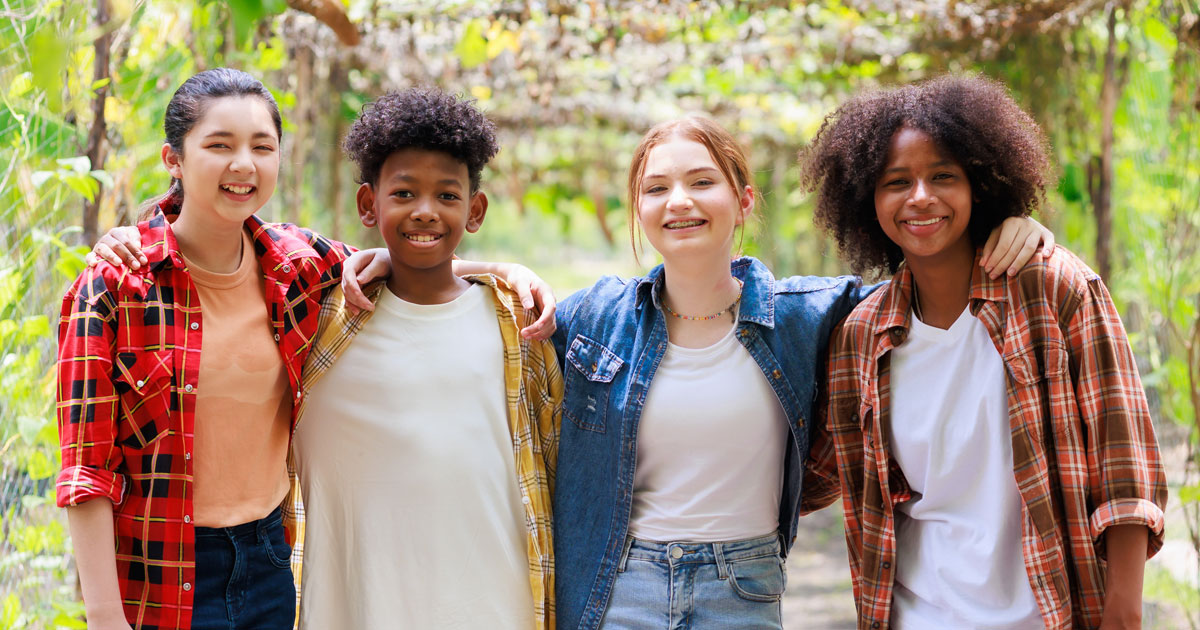
Students in Colorado, Utah, and Arizona can join Adventures courses on Fridays—hands-on experiences like hiking, museum visits, indoor climbing, college tours, and service projects that earn elective or P.E. credit.
Students outside those states can join Adventures Foundations, a flexible, credit-bearing course open to learners anywhere in the world. These experiences build friendships, confidence, and practical life skills alongside academics.
Online School vs. Public School vs. Williamsburg Family of Schools: Side-by-Side Comparison
Choosing the right path means looking past flexibility or convenience alone. Here's how one of our schools compares with a typical online school and a traditional public school.
| |
Traditional Public School |
Standard Online School |
Williamsburg Family of Schools |
| Class format |
In-person, fixed location |
Pre-recorded or asynchronous |
Live, interactive, Mon–Thu |
| Instruction style |
Lecture-based |
Content delivery |
Socratic discussion and mentorship |
| Student support |
One teacher per 25–30 students |
Minimal personal contact |
Dedicated mentors who know each student personally |
| Curriculum philosophy |
Standards-based, test-focused |
Content coverage |
How to think, not what to think |
| Leadership training |
Rarely included |
Not included |
Core part of every program |
| Schedule flexibility |
Fixed, location-dependent |
Flexible |
Flexible, live online classes, and self-paced work |
| In-person experiences |
Yes (on-site only) |
No |
Yes — Adventures in CO, UT, AZ |
| Accreditation |
State-accredited |
Varies widely |
Cognia & ACS WASC (U.S. & international) |
| College outcomes |
Varies by school |
Varies widely |
Alumni at Harvard, Yale, and top universities |
| Test performance |
National average |
Varies |
Strong ACT/SAT performance among online schools |
| Course completion rates |
Varies |
Below average for online |
High course completion rates |
| Cost |
Free (public) |
Varies |
Up to 100% tuition-free depending on state |
| Available to |
Local residents only |
Varies |
Nationwide + worldwide (private) |
Questions to Ask When Comparing Schools
Every family has different priorities. Some students thrive in a traditional classroom. Others need more flexibility, more individual support, or an environment built around discussion and mentorship.
As you compare schools, ask:
-
Will my student interact with their teachers regularly?
-
Are classes live or fully self-paced?
-
How much individual support will they get?
-
Does the curriculum build critical thinking?
-
Are there chances to build leadership and real-world skills?
-
Will my student feel known and connected?
These questions often reveal more than test scores or course catalogs ever could.
What the Results Look Like
The proof is in the outcomes. Our curriculum is fully accredited by Cognia and ACS WASC, two of the most respected accrediting bodies in the world. Our students score well on the ACT and SAT compared with other online schools, and our alumni have gone on to top universities, including Harvard and Yale.
Beyond the numbers, our graduates report something more important: they feel prepared. They know how to think, how to lead, and how to move through the world with confidence.
As one parent put it: "Your academy is a breath of fresh air. You are building future leaders. My son has never been so happy with school. You push them, and they love it! You have a formula that needs to be replicated around the world."
Finding the Right Fit for Your Student
There isn't one educational model that works for every learner, but there is a right fit for every student.
If you want an education that combines online flexibility with real mentorship, live classes, leadership development, and a strong sense of community, one of our schools may be the right next step.
Schedule a consult with an Enrollment Advisor to explore which of our schools best fits your student's goals, ask your questions, and see what learning looks like when it's built around people, not just programs.

 K. Crosby
 K. Crosby : Sep 9, 2026