
 K. Crosby
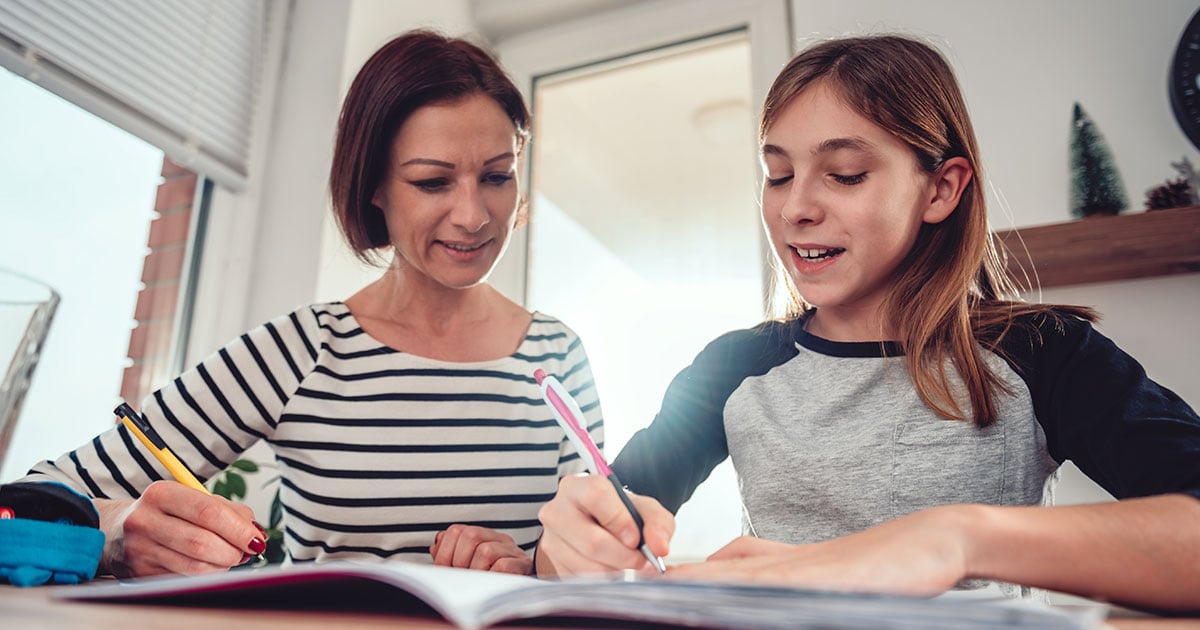
If you're weighing online school vs homeschool, you're probably not looking for someone to tell you one is right and the other is wrong. You want a clear, honest picture of what each one actually involves, so you can choose with confidence.
The good news? Both are real, good paths. In the 2022–23 school year, about 3.4% of K–12 students in the U.S. were homeschooled and another 2.5% learned in full-time virtual schools, according to the National Center for Education Statistics. That's a lot of families who've found that learning at home can work beautifully.
So the question isn't which option is better. It's which one fits your student and your family right now. This guide walks through what each path looks like day to day, the parent's role, academics and college prep, social life, and cost, then offers a simple way to decide.
Quick Answer: What's the Difference?
Homeschooling puts a parent in charge of the whole education: curriculum, instruction, schedule, and records. An accredited online school keeps learning at home but gives instruction, grading, and transcripts to a school, with live classes, mentors, and classmates. Homeschooling offers the most control. Online school offers flexibility with structure and support built in.
Many families love homeschooling in the early years, then look at online school as middle and high school bring advanced subjects, transcripts, and college planning. Others stay on one path the whole way. Both work.
What Each Path Looks Like Day to Day
A Homeschool Day
No two homeschools look alike, and that's a big part of the appeal. Some families use a complete boxed curriculum. Others follow a classical or Charlotte Mason approach, build unit studies around their student's interests, or mix and match.
A typical day might start with math at the kitchen table, move to reading on the couch, and end with a nature walk or a library trip. Many families join a weekly co-op for group classes, science labs, and time with friends. The parent sets the pace, so a student who's flying through fractions can move ahead, and one who needs more time can take it.
An Online School Day
In an accredited online school, the day has more shape. At Williamsburg Family of Schools, most students attend live classes four days a week, joining real-time discussions with mentors and classmates. Between classes, they work on readings, assignments, and projects on their own time.
If a family trip or appointment means missing a live class, the session is recorded so students can catch up. And in Colorado, Utah, and Arizona, many students spend Fridays on in-person Adventures like hikes, museum visits, and service projects.
It's still learning at home, with the freedom that comes with it. If flexibility is part of what drew you to homeschooling, you might enjoy our look at whether the traditional school calendar is working for your family.
The Parent's Time and Role
This is often the biggest difference between the two paths, and it's worth being honest with yourself about it.
In a homeschool, the parent wears every hat. You're the instructor, the curriculum planner, the principal, the record-keeper, and eventually the guidance counselor. For many parents, that's exactly the joy of it. You get a front-row seat to your student's learning and the freedom to shape it around who they are.
It's also a real time commitment, and it tends to grow in middle and high school. Subjects like chemistry, calculus, and a world language ask more of a parent, and many homeschool families start outsourcing a few courses to co-ops, tutors, or online classes around that time.
In an online school, the parent becomes a coach and encourager. Mentors handle instruction, feedback, and grading, and they hold office hours when students need extra help. An Enrollment Advisor walks your family through getting started, and School Counselors help plan the path to graduation.
You're still very much part of your student's education. You'll help build routines, check in on progress, and cheer them on, especially in the middle school years. You just aren't carrying all of it on your own.
Academic Rigor and College Prep
Both paths can lead to an excellent education and a strong college application. They just get there differently.
Homeschool rigor is in the family's hands. That freedom can be wonderful. Homeschooled students often read deeply, move ahead in subjects they love, and pursue dual enrollment or independent projects that make their applications stand out. Many colleges welcome homeschool applicants. The family usually builds the transcript, writes course descriptions, and may lean on test scores or community college courses to show readiness.
In an accredited online school, the school carries the paperwork. At Williamsburg Family of Schools, courses are accredited by Cognia, students graduate with an official transcript, and School Counselors help map out graduation requirements and college plans.
The curriculum is built around teaching students how to think, not what to think. Students read great thinkers, discuss big ideas in Socratic seminars, and take leadership courses designed to build self-mastery and real-world judgment. Our alumni have gone on to universities including Harvard and Yale, and our graduates often say they feel prepared, because they know how to think and how to lead.
Socialization: Both Paths Can Build a Rich Social Life
If you've homeschooled, you already know the "what about socialization?" question has a good answer. Homeschooled students build friendships through co-ops, sports, church and community groups, 4-H, scouting, and part-time jobs, often across a wider range of ages than a traditional classroom offers.
The difference is who does the building. In a homeschool, the parent finds, organizes, and holds the social calendar together. For some families that's a joy. For others, it becomes one more full-time job.
In an online school, much of that community comes built in: a cohort of classmates your student sees in live discussions every week, clubs and activities, and in-person Adventures and events. Your student still has the freedom to pursue outside activities. They just don't have to start from scratch.
We go deeper on this in Will My Student Have a Social Life Outside of Traditional School?, including what the research says.
What Each Path Costs
Homeschooling costs vary widely, and families have a lot of control over them. In a 2024 survey of more than 4,000 homeschooling families, the Home School Legal Defense Association found families spent an average of about $1,295 a year per elementary student and $1,636 per middle or high school student. That covers curriculum, supplies, co-op fees, online classes, lessons, and tutoring. For most homeschool families, though, the biggest investment is time.
Online school costs depend on the school. Private online schools charge tuition, while public online options are tuition-free. At Williamsburg Family of Schools, tuition-free options are available in several states, including Colorado, Utah, and Arizona, and our private school serves families nationwide and around the world.
If cost is a big part of your decision, an Enrollment Advisor can tell you exactly which options are available where you live.
Online School vs. Homeschool: Side-by-Side Comparison
| Homeschool | Accredited Online School (like Williamsburg) | |
|---|---|---|
| Who leads instruction | Parent, often with co-ops, tutors, or outside classes | Mentors in live, discussion-based classes |
| Curriculum | Family chooses everything, including faith-based options | School’s accredited curriculum |
| Schedule | Fully set by the family | Live classes four days a week, plus self-paced work; recorded if missed |
| Parent’s role | Instructor, planner, and record-keeper | Coach and encourager, with mentors and counselors on the team |
| Social life | Built by the family through co-ops, sports, and community | Classmates, clubs, and in-person Adventures built in, plus outside activities |
| Transcript and records | Created and kept by the family | Official transcript from an accredited school |
| College guidance | Family-led | School Counselors help plan graduation and college |
| Cost | About $1,295 to $1,636 per student per year on average (HSLDA, 2024) | Tuition-free in several states; private tuition elsewhere |
| Often a great fit when | Parents want full control and have the time to lead | Families want flexibility with structure, mentors, and a transcript built in |
If you're also weighing a traditional public school, our side-by-side of online school vs. public school covers that comparison too.
A Simple Way to Decide
Start with three honest questions. There's no wrong answer to any of them.
- How much do I want to lead the teaching myself? If designing lessons and teaching every subject sounds energizing, homeschooling gives you room to do it. If you'd rather support your student than instruct them, an online school may feel like a better fit.
- What does my student need in the next few years? Think about advanced subjects, a transcript, college planning, and how much your student wants classmates and discussion.
- What does our family's life look like right now? Work schedules, other children, travel, and your own energy all matter. The best plan is one your family can keep up joyfully.
Homeschooling may be the right call if you want full control over curriculum and pace, you have the time and enthusiasm to lead, and your student is thriving in the rhythm you've built.
An accredited online school may be the right call if you love learning at home but want mentors, classmates, and an official transcript built in, especially as middle and high school get more demanding.
And remember, this doesn't have to be a forever decision. Many families revisit it each year as their students grow.
Where Williamsburg Family of Schools Fits
Many families who come to us have homeschooled for years and loved it. What they're looking for isn't a different philosophy. It's a partner for the next stage.
Williamsburg Family of Schools was built for that. Students keep the flexibility and home-based rhythm families value, and they gain:
- Live, discussion-based classes where they think out loud with classmates instead of working alone through videos.
- Mentors who know them, with a mentor for every class and office hours when they need extra help.
- A classical, leadership-focused curriculum that teaches how to think, not what to think.
- A real community, from classmates and clubs to in-person Adventures.
- An accredited, official transcript and School Counselors to help plan for graduation and college.
We'll be honest about the tradeoff, too. Students follow our curriculum and class schedule, so families give up some of the day-to-day control homeschooling offers. For many families stepping into middle and high school, that's a welcome exchange. For others, homeschooling remains the right call, and that's a good choice.
If you do make the switch, you won't be figuring it out alone. Your Enrollment Advisor will review your student's records, talk through where they are, and share a suggested course path. After your student is accepted, our School Counselors and Registrar review homeschool coursework for credit. And our Learning Labs, which happen every day throughout the school year, help new students get comfortable and start strong.
Frequently Asked Questions
Is online school the same as homeschooling?
Not quite. Both happen at home, but in an online school your student is enrolled in a school that provides instruction, grading, and official records. In a homeschool, the family provides all of those. Students in a tuition-free public online school are public school students, not homeschoolers.
Can my student switch from homeschool to online school in middle or high school?
Yes, and many do. An Enrollment Advisor will look at your student's records and suggest a course path. After acceptance, School Counselors and the Registrar review homeschool coursework to see how it applies toward graduation requirements.
Do colleges accept homeschooled students?
Many colleges welcome homeschool applicants. Requirements vary, so it's worth checking each college's admissions page for what they ask homeschool families to submit, such as transcripts, course descriptions, or test scores.
Do I need a teaching credential to homeschool?
Homeschool laws vary by state, and each state sets its own requirements. The Home School Legal Defense Association keeps an up-to-date summary of homeschool laws for every state.
Can we start an online school partway through the year?
Often, yes. Enrollment windows vary by school and state, and Learning Labs happen every day throughout the school year, so a student who joins in October gets the same support to start strong as one who joins in August.
Choosing What Fits Your Student Now
There's no single right way to educate a student at home. Homeschooling and accredited online school are both real, good paths, and the families who choose them share the same hope: a student who's known, challenged, and growing into someone they're proud to be.
The right choice is the one that fits your student at this stage, and helps them keep becoming curious, confident, and ready to lead their own life.
Ready to Talk It Through?
If you're wondering whether an online school could be the next step for your homeschool, we'd love to hear about your family. Schedule a Consultation with an Enrollment Advisor to share your student's story, ask your questions, and explore whether one of our schools is the right fit.